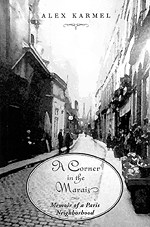
"A Corner in the Marais"
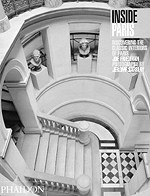
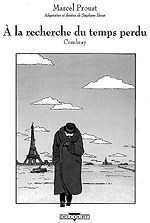
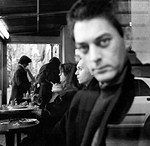
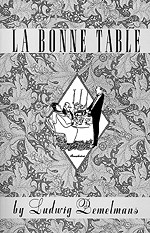
by Alex Karmel (Godine, 200F) In 1982, Alex Karmel and his wife visited a sixth-floor apartment at the corner of rue Vieille-du-Temple and rue des Rosiers in the Marais. It was only 50 square meters, but something about the exposed beams, the sloping ceilings and the view from the kitchen window made them fall in love with it. As Karmel puts it, "outside there were, undeniably, the rooftops of Paris." And so this book was born. It is an unusual mix, part guidebook, part history, part personal recollection. It is subtitled "Memoir of a Paris Neighborhood," but even that is only part true, given that large tracts of it describe the city long before Karmel was born. Not that finding a label matters much; Karmel is a born writer, and this is his personal paean to a neighborhood that he knows and loves as only an outsider can. The book has three main sections. In the first, Karmel recalls his first trips to Paris in the early '50s, when he was enchanted by a city still "suspended in a pre-War limbo." The nostalgic charm of the period is beautifully evoked: "To go the Chien qui Fume for a late supper, when the first trucks from the country were unloading their vegetables, to feast on snails in garlic butter with plenty of fresh bread, washed down with new Beaujolais preferably Brouilly direct from the barrel, made you forgive a lot of dim light bulbs and drafty rooms." Then the time frame shifts to the '80s, with the purchase of the house and the discovery that it dates to the 14th century. In the second section, Karmel tells the story of his house from the Middle Ages on. He has very few facts about the residence itself, and the one well-documented event, an auction in 1647, is not very enlightening. Mostly he is content to chronicle the ebb and flow of French history and its effect on his little corner of the city. As Paris grows from a muddy village to the capital of Europe's greatest power, Karmel describes renovations to the house and the slow changes in its residents' daily routines. He writes with a novelist's eye for illuminating details and an obvious love for buildings and the tales they conceal. For instance we learn that even the grand hôtels particuliersdid not have rest rooms, and men and women relieved themselves where they stood: "any corner would do, although fastidious men, such as the Cardinal Richelieu, were known to prefer the fireplace." Like the best American writers (he was born in Manhattan) Karmel wears his erudition lightly; his explanation of medieval half-timber housebuilding, for instance, is fascinating. The book's final section, "Neighbors," contains four walks through the area, one straying to the Ile St-Louis. They are rich in anecdote, written with a contagious enthusiasm for history. The book is also beautifully produced, on old-fashioned vellum paper with lovely endpapers and elegant type. "Inside Paris" by Joe Friedman, photos by Jerome Darblay (Phaidon, 120F) "Mansions of Paris" by Olivier Blanc, photos by Joachim Bonnemaison (Terrail, 140F) "Intérieurs parisiens" by Lisa Lovatt-Smith (Taschen, 210F) Paris is a city of grand boulevards and street cafés. But what about the hidden Paris, the leafy courtyards and elegant bourgeois interiors that lie behind those imposing street doors? These three books take the reader past the concierge to a city most visitors rarely glimpse. The best of the three, "Inside Paris," concentrates on public spaces, including stores, theaters, schools, libraries and government buildings such as the outrageous salon of the Ministère des Finances. There are just one or two photos of each interior, and the quality is consistently superb. The choices are original: the Second-Empire marble staircase of the Italian embassy, the late-19th century mosaics of Aux Cinq Poissons fishmongers, an art deco public lavatory at the Madeleine. A thorough gazeteer adds a history, addresses and opening hours, if any. "Mansions of Paris" concentrates on hôtels particuliers,those elegant metropolitan châteaux from the 1600s and 1700s, mostly in the Marais and the boulevard St-Germain. There are 140 color illustrations, including historical documents. Many of the photos are excellent, though the odd angles and fish-eye views don't always come off. The substantial text tells lively stories about each mansion. But it is translated from French, and it shows; readers who don't know their history will miss Alex Karmel's American eye. "Intérieurs parisiens" is the heftiest of the three books, with nearly 500 color photos. Not unlike "Allo!" magazine, it invites us on a guided tour of 51 beautiful homes. The owners include well-known names such as couturier Thierry Mugler, actress Isabelle Adjani, and artists Pierre et Gilles, whose kitsch kitchen is a wonder to behold. Many are collectors, of antiquities, golliwogs or Warhols. Given the size of even a huge Parisian apartment, this starts to get claustrophobic; I breathed a sigh of relief when I got to Japanese architect Masakazu Bokura's minimalist whitewashed walls. The text, little more than captions, is in French, English and German. Briefly Noted "Favorite Recipes" (130F) An excellent cookbook produced by the Junior Guild of the American Cathedral in Paris, with favorite recipes from France, the States and beyond. " La Plume et Le Zinc:Writers in the Cafés of Paris" by Jeanne Hilary (Hazan, 195F) Hilary's atmospheric black-and-white photographs of writers in cafés, accompanied by short excerpts. Most of the subjects are French, plus the usual anglo suspects Harry Mathews, Edmund White, Paul Auster and Nancy Huston. "Camus: A Life" by Olivier Todd (Vintage, 90F) Paperback edition of fine biography of the author of "L'Etranger,"both a great, unflinching writer and a man of "endearing human warmth and goodness." Local Interest The man behind Madeline Parents who take their kids to see the new film "Madeline," which opens on February 17, will no doubt rush to the bookstores in search of the original story afterwards. Or stories; the plot weaves together bits from all six original Madeline books. The cheeky heroine's creator, Austrian-born Ludwig Bemelmans, moved to New York in 1914, and spent the next 25 years painting and working in restaurants, both in Europe and the US. After the huge success of "Madeline" (1939), the first adventure, he contributed articles and cartoons to magazines such as the New Yorkerand wrote many books for children and adults. "Madeline's Rescue" won the prestigious Caldecott Award in 1954. Bemelmans was a bon vivantwho once told an editor that he wanted "Tell Them It Was Wonderful" incised on his tombstone. The best of his writings on food and dining can be found in "La Bonne Table"(Godine, pbk), which includes hundreds of his wonderfully witty drawings. Searching for Proust The publication of a bande dessinéeversion of Proust's "Du Côte de Chez Swann," the first volume of "A la Recherche du Temps Perdu,"has created an uproar. It's hard to see why. The illustrator, Stéphane Heuet, has done a good job of adapting the dream-like atmosphere of the novel, and he quotes the master liberally. But I had to laugh when I saw the famous madeleine being wafted before the famous moustache. Wired Proust fans are being asked to contribute to Penguin's new translation of the novel by visiting the site at www.penguin.co.uk/proust. To start the debate, the editor is asking for suggested translations for the opening sentence, "Longtemps, je me suis couché de bonne heure."Among the comments so far: "Please, more full stops!" |